
8 Signs Your Car Battery Is Dying (and What to Do About It)
Car batteries rarely fail without warning. In most cases the car gives you days or weeks of small signs first, and drivers who know them can replace the battery on their own terms instead of at the roadside. Here are the signs to watch for, how to tell a weak battery from a charging fault, and what to do next.
In short
- Slow starting, clicking, dim lights and a battery warning light are the commonest signs.
- A swollen case, a rotten-egg smell or heavy corrosion mean the battery should be replaced now.
- If a new battery also dies quickly, the fault is probably in the car, not the battery.
- A simple voltage check tells you a lot before you spend any money.
1. The engine turns over slowly
The classic early sign. When you turn the key or press the start button, the engine cranks more slowly than usual before it fires, often with a dragging sound. It tends to be worst first thing in the morning or after the car has stood for a few days.
2. You hear clicking instead of cranking
A rapid clicking noise when you try to start means the starter is asking for power the battery cannot give. One click followed by silence can point to the starter motor instead, so note exactly what you hear.
3. Lights dim and electrics misbehave
Headlights that dim at idle and brighten when you rev, a weak horn, slow electric windows, or a radio and dashboard clock that reset themselves all point to low voltage.
4. The battery warning light comes on
The red battery symbol on the dashboard does not always mean the battery itself is at fault. It usually means the charging system is not keeping the battery topped up. Do not ignore it: have the car checked soon, because you may be running on the battery alone.
5. You need jump-starts more and more often
One flat battery after leaving the lights on is bad luck. Needing a jump-start every week or two means the battery is no longer holding charge.
6. The case is swollen, cracked or leaking
A battery that looks bloated or has a cracked case has usually been overheated or overcharged. A rotten-egg smell near a lead-acid battery is a sign of leaking gas. In either case stop using the battery and replace it. Do not try to jump-start a damaged battery.
7. Heavy corrosion on the terminals
White, green or blue crust around the posts gets in the way of the electrical connection. Light corrosion can be cleaned off, but if it keeps coming back quickly the battery is probably venting and near the end of its life.
8. It is simply old
Heat is hard on lead-acid batteries, and many do not last much beyond a year or two here. Check the date on the label. If yours has reached that age and is showing any of the signs above, it is better to plan a replacement than to wait for it to fail.
Is it the battery or the car?
This matters, because a new battery will not fix a charging fault, and it will not last long in a car that has one.
| What you notice | More likely the battery | More likely the car |
|---|---|---|
| Car starts after a jump and keeps running normally | Yes | |
| Car starts after a jump but dies again while driving | Yes, often the alternator | |
| Battery goes flat when parked for only a day or two | Possible | Yes, something may be draining it (a “parasitic drain”) |
| Battery warning light stays on with the engine running | Yes, charging system | |
| Second new battery has failed within months | Yes, have the alternator, regulator and wiring tested |
A quick voltage check
If you or your mechanic have a multimeter, two readings on a conventional 12V lead-acid battery tell you a lot:
- Engine off, car rested for a few hours: around 12.6 volts is healthy. Around 12.2 volts is about half charged. Below 12 volts the battery is deeply discharged.
- Engine running: roughly 13.7 to 14.7 volts shows the alternator is charging. Much lower or much higher suggests a charging fault.
A proper load test at a battery shop is the most reliable check, because a worn battery can show a good voltage and still collapse when asked to start the engine.
What to do when the signs appear
- Do not wait for it to fail. Batteries choose bad moments.
- Check the terminals. Make sure the clamps are tight and clean.
- Get the charging system tested if the warning light is on or batteries keep failing.
- Note your battery size. Take a photo of the label on top of the battery so you can match the replacement. Our guide to choosing the right battery size explains the codes.
- Decide what to replace it with. If you are tired of doing this every year or two, read our comparison of lithium and lead-acid batteries.
How to make any battery last longer
- Drive the car regularly. Short trips and long periods parked both shorten battery life.
- Switch off lights, radio and chargers before you turn off the engine.
- Keep the battery firmly clamped. Vibration damages batteries.
- Fix charging faults promptly.
- Do not let the battery sit flat. Recharge or replace it.
Time for a new battery?
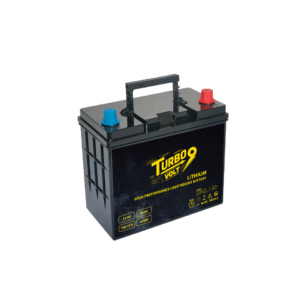
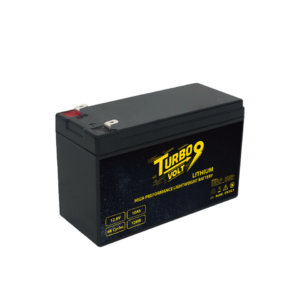
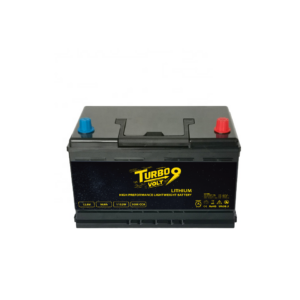
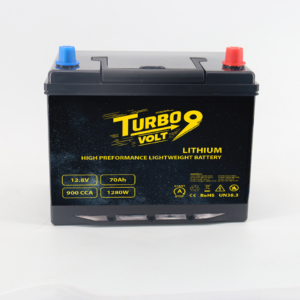
TurboVolt lithium batteries are built to last far longer than conventional batteries and come with a 3-year warranty.
Shop TurboVolt BatteriesChat on WhatsApp